
Greg Morton wins Rookie of the Year

May 3, 2024


A smiling person in a dark button-down shirt centered against a plain, solid orange background.

Greg Morton of The Baltimore Banner wins the MDDC Rookie of the Year 2023 prize for new journalists for his “sophisticated, in-depth writing” teamed with exceptional data journalism skills. 


This award honors a new journalist with less than 18 months’ experience in the field.  The submission package included three to five clips of the reporter’s work and a letter of recommendation from their editor.  Five nominations were received.   


The award was judged by a distinguished trio: Greg Conderacci, of Good Ground Consulting (and a former journalist) Tom Linthicum, retired editor of The Baltimore Sun and The Daily Record, and Carol Ann Riordan, retired VP of programming and personnel for American Press Institute.  


The judges were impressed with the nominees, noting that some of them have been working for just a short period of time, and producing exceptional work.  Each of the nominees showed expertise that doesn’t often come from rookies. Journalists today need to be able to tell their stories in a meaningful way, and all of the nominees demonstrated strong skills that contribute to their publications’ success.  


The judges remarked that Morton had the data analysis skills that made his work exemplary, and teamed that with strong writing that showed obvious influence in his newsroom. Ryan Little, Data Editor at the Banner, shared that “Greg possesses an exceptional talent for distilling complex datasets into compelling narratives and visualizations hat are not only accessible but engaging.  His work analyzing crime and education data led to some of the most important reporting on these critical issues in 2023. His work analyzing Baltimore crime data was instrumental in launching The Banner’s first two large scale projects on auto thefts and homicide, both of which have garnered acclaim from readers and other journalists.” 


Morton has a reputation for work ethic, drive and teamwork in the newsroom.  Little goes on to say “He delivered in-depth analysis that uncovered pivotal findings in every project he took on. His desk is now one of the busiest places in The Banner newsroom. Countless reporters constantly pitch him. Getting Greg to work on a story with you has become a near guarantee that the story will have impact and be well-read.” 


Morton is a 2021 graduate of Howard University, with a degree in Economic.  He went on to receive a Master’s degree in Journalism from the University of Maryland, College Park in December 2023.  He has held data journalism internships at ProPublica and The Washington Post.  

Nominees

Braden Hamelin, Washington Jewish Week 

A person with curly dark hair wearing a light blue collared shirt, shown in a car interior.

Braden Hamelin joined Washington Jewish Week in September 2023 and has “unquestionably been a tremendous addition to our team, his Editor, Aaron Troodler, writes. The judges felt that Hamelin, who has the antisemitism beat, covered one of the biggest stories in America now and handled it well.  One of the judges remarked, “I see great things down the road” for Hamelin.  Troodler notes “Braden is a talented writer who has an innate knack for journalism. He has successfully and skillfully covered a wide array of topics, from local news stories to profile pieces, and has also written about complex and serious subjects such as antisemitism and the impact that the Oct. 7 attacks in Israel and the ensuing war has had on DMV residents.” 

Clara Longo de Freitas, The Baltimore Banner 

A person with shoulder-length brown hair and large gold earrings smiling against a solid, burnt-orange background.

The judges found Clara Longo de Freitas’ portfolio was full “quality and a quantity of work that far surpasses what would be expected of a traditional rookie.” Andrea McDaniels, managing editor, notes her “outside the box thinking” that has marked her tenure of the neighborhoods beat.  McDaniels continues, “One of Clara’s greatest strengths is her natural ability to spot a good story, something that can be hard on an enterprise beat like neighborhoods. She has an instinct for what will make a good read and what readers will find just plain interesting. She has a natural curiosity and way too many ideas on her story list. Clara also leans toward accountability and trying to prove when institutions aren’t doing what they should, rather it be providing interpretation services for immigrants or keeping up with basic infrastructure needs. She digs until she finds the answer.” 

Annie Jenneman, The Baltimore Sun 

A smiling person with shoulder-length, two-toned brown and blonde hair wears a black turtleneck against a plain background.

Annie Jenneman is forging new paths at The Baltimore Sun, where she is the first data and engagement journalist in the newsroom.  Steve Earley, the senior editor for engagement and data, writes that “Annie is an evangelist for her two specialties, preaching respect for numbers and people, and the possibilities and peril they can create.”  She was essential to the reporting and presentation of the Sun’s investigation into the Catholic Church abuse in Maryland. Earley continues, “[t]he database and interactive table she built was the foundation of our December story on more than 100 people who were accused of abuse and had ties to Maryland but weren’t named in the Maryland attorney general’s report.”  Data is not her only specialty, though.  Earley shares that “On the engagement side of Annie’s role, she resurrected our dormant TikTok account and behind the scenes has counseled colleagues on strategy, impressing with her consideration of broader newsroom systems and workflows in her feedback.” 

Maggie Trovato, The Star Democrat 

A smiling person with wavy dark hair wears a ribbed orange sweater with dark horizontal stripes against a dark background.

Maggie Trovato is a courageous journalist, focusing on government accountability reporting in her short time in the newsroom.  Her editor, Wendy Weitzel, says “Maggie consistently finds ways to elevate her day-to-day writing, looking for new details on ongoing stories and providing fresh angles to meeting and event coverage. She quickly builds trust with sources and has developed her photography skills to produce well-composed photos to help tell the stories.”  The judges noted that Maggie had solid reporting skills and worked to diversify her portfolio by developing photo skills.  Weitzel notes that “In November, [Maggie] completed a month-long investigation 


into the unclean and sometimes unsafe conditions at a local apartment complex that arose when management failed to pay its bills. Following the story, the city began taking steps to fix the situation and hold the building owner accountable.” 

Recent Posts

May 27, 2026
By Rebecca Snyder Executive Director, MDDC Press Association  Governor Wes Moore’s veto of SB 459 is a disappointing and misguided decision that overlooks both the capabilities of Maryland’s local news organizations and the urgent need to strengthen the state’s local information infrastructure. The legislation was straightforward and practical: require Maryland state agencies to prioritize local news organizations (print, digital, radio and broadcast) for a portion of their advertising spending. It was revenue-neutral. It did not create a new tax, a new program, or a new bureaucracy. It simply ensured that more Maryland advertising dollars stayed in Maryland communities. Lawmakers across the political spectrum understood that value. SB 459 passed unanimously in the Senate and with overwhelming bipartisan support in the House. Legislators from both parties recognized a simple truth: local news matters. In vetoing the bill, Governor Moore expressed concerns about costs and suggested that Maryland’s local news organizations could not effectively deliver advertising to the audiences state agencies need to reach. That rationale fundamentally misunderstands today’s local media landscape. Maryland’s local news organizations include digital-first outlets, public media organizations, commercial broadcasters, radio stations, community publications, and multimedia news platforms serving audiences across every region of the state. Many operate full service advertising agencies that can place any type of advertising needed, including national platforms. 0020Collectively, they provide sophisticated advertising and communications services that rival — and often outperform — national platforms when it comes to reaching Maryland audiences. Our members regularly execute highly targeted advertising campaigns using digital audience segmentation, programmatic advertising, email marketing, video, social amplification, sponsorships, direct mail, broadcast, radio, and event-based outreach. They work with businesses, nonprofits, healthcare organizations, universities, tourism agencies, and government entities every day to connect messages with precisely the audiences they intend to reach. In fact, local media outlets often have a far deeper understanding of Maryland communities than national advertising platforms ever could. That matters because this debate is about more than advertising dollars. It is about whether Maryland will invest in the civic infrastructure that keeps communities informed and connected. Local journalism remains one of the few institutions dedicated to covering school boards, county governments, public safety, elections, housing, economic development, and the daily issues that shape residents’ lives. When local news organizations disappear, communities lose accountability, civic participation declines, and misinformation fills the vacuum. SB 459 recognized that state government advertising can serve two purposes at once: effectively communicate with Maryland residents and strengthen the trusted local institutions that help those residents stay informed. The bill also acknowledged another important reality: local media outlets are often best positioned to reach underserved communities. Community publications, local radio stations, ethnic media outlets, and regional digital publishers have built trust with audiences that are frequently overlooked by large national advertising buys. Supporting local media is not only smart economic policy; it is smart communications policy. And economically, the argument is equally compelling. Every year, Maryland spends taxpayer dollars on advertising campaigns intended to reach Maryland residents. SB 459 simply sought to ensure that more of those dollars circulate through Maryland businesses, support Maryland jobs, and strengthen Maryland-based organizations rather than flowing almost entirely to out-of-state tech platforms and national advertising networks. That is not protectionism. It is common sense. Other jurisdictions across the country have already adopted similar approaches because they recognize that government advertising dollars can help sustain local media ecosystems without expanding government spending. Maryland had the opportunity to join them with a balanced, bipartisan solution. Instead, the Governor chose to veto it. We respect Governor Moore’s commitment to innovation and economic growth. But on this issue, the administration appears to have underestimated both the sophistication and the reach of Maryland’s local media organizations. This conversation should not end with a veto. Marylanders benefit when they have access to strong local journalism. Communities benefit when trusted local outlets remain financially sustainable. And taxpayers benefit when state communications are delivered through organizations that understand Maryland audiences and communities. Support for local news should not be partisan. The General Assembly understood that. Maryland residents understand that. We hope the administration will reconsider its view of what local media can accomplish and recognize that investing in Maryland journalism is also an investment in Maryland communities.
May 8, 2026
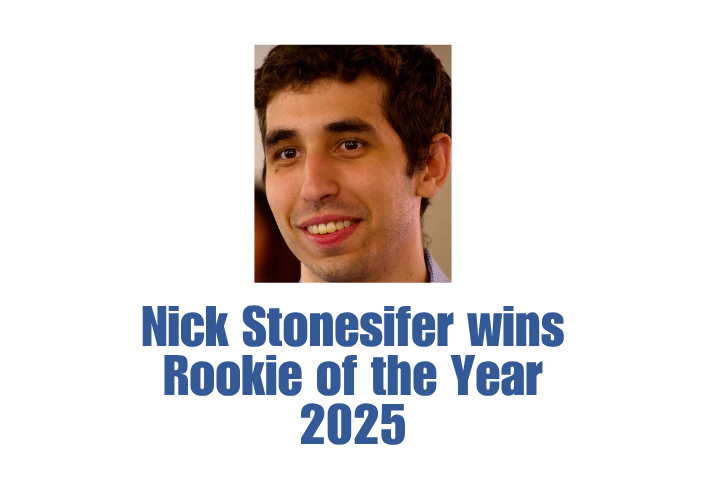
Reporters, editors and other media professionals gather for conference and awards program remotely and in person (5/8/26 - Annapolis, MD) – Members and supporters of the Maryland | Delaware | DC Press Association came together this week to highlight news with integrity and excellence in journalism by recognizing the winners of the Contest, which celebrates print and online work completed in 2025 . The contest, governed by the Association’s Editorial and Advertising Committees, admitted over 1,594 entries among 86 categories . There are six divisions in the contest, which group member publications into categories governed by total audience numbers, combining print and digital readership. One Best in Show award is given in each category across all divisions. These entries were judged by news media professionals at the Florida State Press Association. There are several top awards given across all divisions to the publication. These include the James S. Keat Freedom of Information Award for demonstrating use of public information act requests in its reporting, Courage in Journalism, honors acts of courage in journalism and strength in adversity while uncovering truth, and Best Moves, which highlights the most important thing MDDC member organizations did in 2025. The contest also honors top personnel in design and sales and honors new journalists. Members of the MDDC Press Foundation board of directors and journalism academics judged the top awards and the video audience voted on the Best Moves. New for 2025 was the A-Mark Prize for Investigative Journalism, which provides first, second and third place cash prizes for work in Maryland, Delaware and the District of Columbia. The capstone award, one per division, is News Organization of the Year. The Banner won the James S. Keat Freedom of Information Award for a wide-ranging portfolio of substantive projects that used public records in reporting. From investigations into child deaths from abuse and neglect to reporting on public officials’ use of Google Chat that auto deletes messages after 24 hours, Banner reporters were persistent in their pursuit of public records. Their groundbreaking investigation into the public transit times endured by Baltimore City’s schoolchildren was a finalist for the Pulitzer Prize. The award is named for Jim Keat, a retired editor and foreign correspondent for the Baltimore Sun, who was a long-time advocate for public information access. Keat is also a member of the MDDC Newspaper Hall of Fame. Read more . The Star Democrat was awarded the Best Move of 2025 for its new daily emailed newsletter which combined strong data analytics and local content to create a useful product with clear revenue gains. The winner was determined by audience vote. Read more . The Association recognized a new journalist with the Rookie of the Year award. This award honors a new journalist with less than 18 months' experience in the field. Six nominations were received from five member publications. Nick Stonesifer of Spotlight Delaware is the 2025 Rookie of the Year for his “well researched, well written and important work” teamed with a drive and determination to use public records in his reporting. Read more . Gabriella Ferraro O’Brien won Designer of the Year , which honors a body of work over the contest cycle. O’Brien’s portfolio of work was noteworthy for her “impressive submission of imaginative and creative design with sophisticated use of white space that allows for typographic hierarchy. The variety of typefaces, font sizes, typeface weights, and colors contribute to the hierarchy while the page designs feel unified.” Read more . The Baltimore Beat (baltimorebeat.com) and Baltimore Fishbowl (baltimorefishbowl.com) share Best of Show for MDDC’s Website of General Excellence category, which honors a news organization’s ability to connect with readers through social media and engagement, and local news coverage. The judges noted “Baltimore Beat stands out with bold, hyper-local links that are interesting and useful.” “Baltimore Fishbowl’s presentation offers a wonderful array of information with attractive, user-friendly design.” The award was judged by journalism instructors at Loyola University of Maryland. Read more. The News Organization of the Year awards represent the best publication in each division. These awards are chosen based on the points accumulated for first and second prizes in each category. The Baltimore Banner won the award in Division A; The Frederick News-Post was named News Organization of the Year for Division B; and Catholic Review won in Division C. Baltimore Beat and Spotlight Delaware shared the award in Division D; Coastal Point was named News Organization of the Year for Division E; and Morning Star Publications won in Division F. For a full listing of winners and their award-winning work, view our presentation episodes at https://youtube.com/playlist?list=PLRxzvJD4IXLBvNkmcUfFUogmBCw35XKUa&si=EAww-G0KFMx6V67w ### ------------------------------------------------------------------------------------------ The Maryland | Delaware | DC Press Association is a vibrant, influential association representing over 100 member news media organizations in our region. We believe a strong news media is central to a strong and open society. We help our members succeed through advocacy efforts, revenue generation, professional development and industry recognition. Learn more at www.mddcpress.com .
Show More