May Is A Good Month For Relevance

Thomas A. Silvestri


May 19, 2021


The Relevance Project

We begin with breaking news:


The Relevance Project has started a SUPPORT LOCAL JOURNALISM section. Check out the work-in-progress.


This expansion will allow the REVENUE RESOURCE 2021 to be all about money.

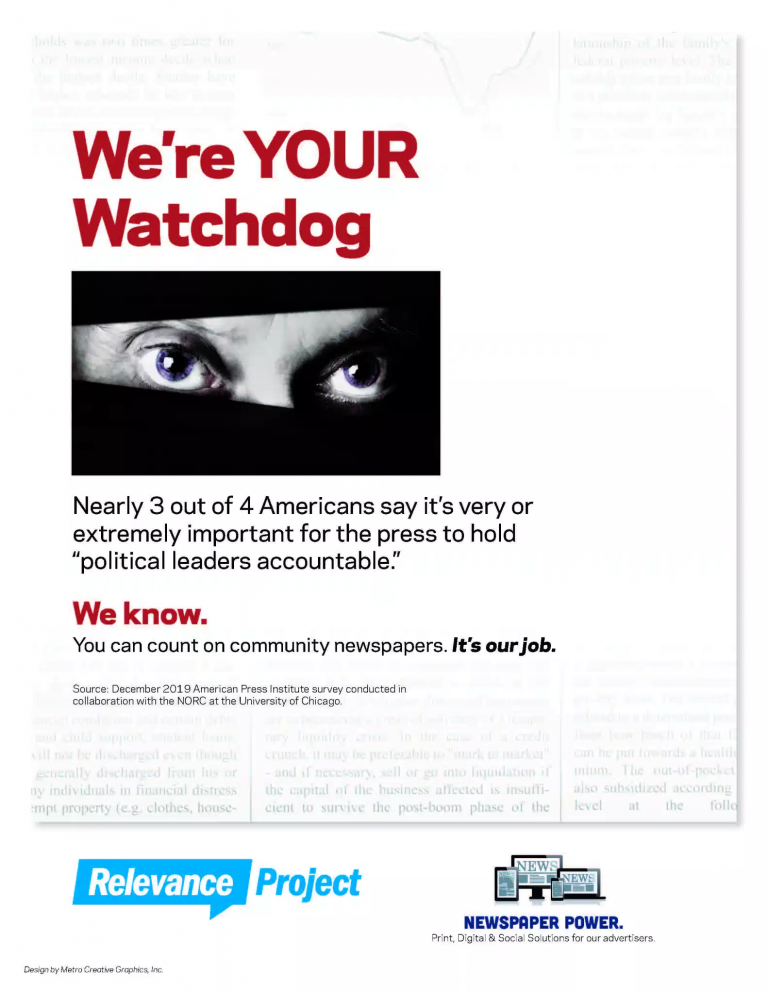
A promotional ad for

Thanks to all of the journalists who asked The Relevance Project, “What about us?”


We heard you. 


Here is an example of the type of advocacy you’ll see:


For additional details on Support Local Journalism with Relevance: 


Read about it here.


Followers of The Relevance Project — thank you, by the way — know the drill. Sign up

on www.relevanceproject.net to receive the Relevant Points when they are posted. If not, wait for the monthly newsletter to learn what’s new. 


Your choice. 


Here’s a quick summary on what’s been added since the April Update:

A smiling person in a blue suit and tie holding a newspaper in front of a Mississippi Press Association sign.

#1. THE DIRECTOR Q&A


Everyone in NAM knows Layne Bruce and his can-do reputation. That’s another good reason to feature him in our third in a series of Q&As with association executive directors, if anything to reveal a fact or two about Layne that you might not know. Read on.


#2. New Direction


Ever wonder what your association’s website says about your organization, leaders and members? Rebecca Snyder was tired of the “clunky” nature of the MDDC Press Association’s online hub. So, she changed it to “spunky.” See it here.

#3. Help This Friend


U.S. Sen. Maria Cantwell of Washington state made news at last week’s America’s Newspapers spring conference when she advocated that $2.3 billion should go to local newspapers and broadcasters to repair the “communications infrastructure.” (The message above is in the new SUPPORT LOCAL JOURNALISM section.) Awarding newspapers federal tax credits and grants will put back newsroom jobs eliminated by years of retrenchment. Cantwell says she can’t do it alone, however. She needs associations and community newspapers to persuade their representatives in Congress to join in the rescue. Learn more here.


#4. Ad Agency Opportunities


This summary repeats the 9 actions associations should consider to make their ad services more Relevant. It is based on a review of how associations pitch their ad agencies and ad services on their websites. Read all 9 Opportunities here.


#5. Be THE Community Forum


We continue our series on this important Relevant strategy with the strongest case to date on why associations and community newspapers should seize the advocacy for local journalism and elbow out of the picture all of the so-called national experts. Deepen trust with Community Forum initiative. If you read one Relevant Point today, make it this one.


#6. All Eyes On Florida

Logo for the Florida Press Association featuring a white silhouette of Florida overlaid on a black circle with text around.

Associations have been watching developments in the Sunshine State where a potentially damaging debate yielded to a compromise that installs the Florida Press Association as the “Gateway to Public Notices.” Our Q&A with Jim Fogler is a must-read. Dig in here.

#7. Indispensable Journalism


You have to admire an association committee feeling so motivated that members create a statewide collaboration to better examine a controversial subject. Look to the Iowa Newspaper Association for the story behind the series about the inconsistent policies governing police body cameras and public access to the videos. Yes, collaboration can work big time. See here.

Logo with the letters

#8. Thought Leader


Will MediaNext join jazz, gumbo and the Saints when you think about Louisiana? The Louisiana Press Association hopes so as it builds out a new training program that initially is focusing on digital revenue. NAM members are invited to join in the learning, too. The inside scoop is here.


#9. Taking Advantage of Video


California News Publishers Association has revamped its advocacy for members and one of the first victories is a new approach to circulating its messages about the importance of trusted local journalism. It involves video and zeroing in on legislators and influencers. Fingers crossed the video atop this Relevant Point plays for you.

#10. Leave Print Alone


Why do some publications learn the hard way that revamping a print product to match a digital design doesn’t please loyal readers. They want news and simple, not glitz and complex. Here’s one publication that reversed course to cheers. Call it a new type of “bottom line.”


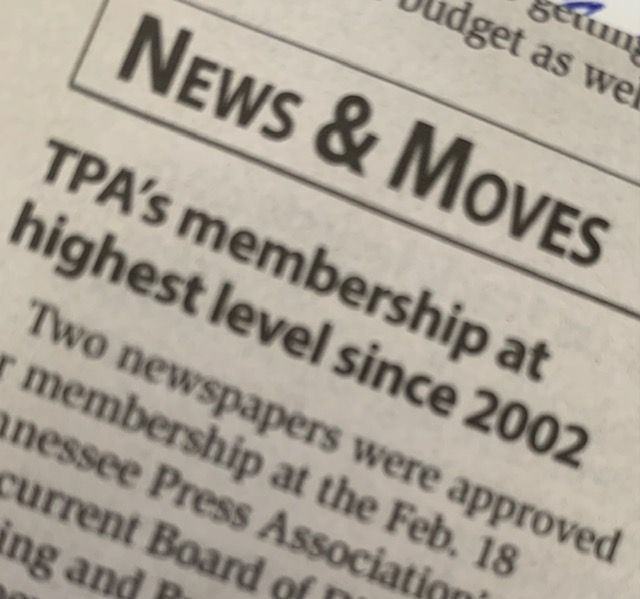
A close-up of a printed newspaper headline reading

#11. On The Upswing


Send those knuckleheads who say newspapers are dying to Tennessee, where the press association has a positive membership story to tell. Start spreading the news.


#12. Inclusion Trend


Another association changes its membership bylaws to expand its tent to embrace non-traditional publishers. All good. Any guesses on who will be next?

#13. Ah, The Days Of Razor Blades and Wax


We shed a tear when we spotted David Thompson’s suggestion that news and production veterans in Kentucky celebrate National Paste-up Day. Be patient. The Paste-Up Era won’t easily compute with those whose fingers are stuck to smartphone keyboards. Roll it here.


14. Welcome, Lisa M. Simpson


There’s a new executive director in Arizona. She is focused on change. And these Top 3 Actions.


That’s it Richmond, VA, where The Relevance Project ventured out of the pandemic bunker without a mask last week. It felt good. Real good. 


You can catch the latest version of 10 Things You Need To Know About The Relevance Project this Thursday during the Colorado-Kansas virtual joint conference. It will be an honor being a part of this collaboration. 


Let us know if you need something. Our thanks to Metro Creative Graphics for its design and production of Relevance Project material, which are free to NAM associations and their members. 


And always remember: RELEVANT is an action.


Thomas A. Silvestri
Executive Director
The Relevance Project
An Initiative of the Newspaper Association Managers


TAS@relevanceproject.net
804-690-3361


Follow the RELEVANT POINTS blog on www.relevanceproject.net


Recent Posts

May 27, 2026
By Rebecca Snyder Executive Director, MDDC Press Association  Governor Wes Moore’s veto of SB 459 is a disappointing and misguided decision that overlooks both the capabilities of Maryland’s local news organizations and the urgent need to strengthen the state’s local information infrastructure. The legislation was straightforward and practical: require Maryland state agencies to prioritize local news organizations (print, digital, radio and broadcast) for a portion of their advertising spending. It was revenue-neutral. It did not create a new tax, a new program, or a new bureaucracy. It simply ensured that more Maryland advertising dollars stayed in Maryland communities. Lawmakers across the political spectrum understood that value. SB 459 passed unanimously in the Senate and with overwhelming bipartisan support in the House. Legislators from both parties recognized a simple truth: local news matters. In vetoing the bill, Governor Moore expressed concerns about costs and suggested that Maryland’s local news organizations could not effectively deliver advertising to the audiences state agencies need to reach. That rationale fundamentally misunderstands today’s local media landscape. Maryland’s local news organizations include digital-first outlets, public media organizations, commercial broadcasters, radio stations, community publications, and multimedia news platforms serving audiences across every region of the state. Many operate full service advertising agencies that can place any type of advertising needed, including national platforms. 0020Collectively, they provide sophisticated advertising and communications services that rival — and often outperform — national platforms when it comes to reaching Maryland audiences. Our members regularly execute highly targeted advertising campaigns using digital audience segmentation, programmatic advertising, email marketing, video, social amplification, sponsorships, direct mail, broadcast, radio, and event-based outreach. They work with businesses, nonprofits, healthcare organizations, universities, tourism agencies, and government entities every day to connect messages with precisely the audiences they intend to reach. In fact, local media outlets often have a far deeper understanding of Maryland communities than national advertising platforms ever could. That matters because this debate is about more than advertising dollars. It is about whether Maryland will invest in the civic infrastructure that keeps communities informed and connected. Local journalism remains one of the few institutions dedicated to covering school boards, county governments, public safety, elections, housing, economic development, and the daily issues that shape residents’ lives. When local news organizations disappear, communities lose accountability, civic participation declines, and misinformation fills the vacuum. SB 459 recognized that state government advertising can serve two purposes at once: effectively communicate with Maryland residents and strengthen the trusted local institutions that help those residents stay informed. The bill also acknowledged another important reality: local media outlets are often best positioned to reach underserved communities. Community publications, local radio stations, ethnic media outlets, and regional digital publishers have built trust with audiences that are frequently overlooked by large national advertising buys. Supporting local media is not only smart economic policy; it is smart communications policy. And economically, the argument is equally compelling. Every year, Maryland spends taxpayer dollars on advertising campaigns intended to reach Maryland residents. SB 459 simply sought to ensure that more of those dollars circulate through Maryland businesses, support Maryland jobs, and strengthen Maryland-based organizations rather than flowing almost entirely to out-of-state tech platforms and national advertising networks. That is not protectionism. It is common sense. Other jurisdictions across the country have already adopted similar approaches because they recognize that government advertising dollars can help sustain local media ecosystems without expanding government spending. Maryland had the opportunity to join them with a balanced, bipartisan solution. Instead, the Governor chose to veto it. We respect Governor Moore’s commitment to innovation and economic growth. But on this issue, the administration appears to have underestimated both the sophistication and the reach of Maryland’s local media organizations. This conversation should not end with a veto. Marylanders benefit when they have access to strong local journalism. Communities benefit when trusted local outlets remain financially sustainable. And taxpayers benefit when state communications are delivered through organizations that understand Maryland audiences and communities. Support for local news should not be partisan. The General Assembly understood that. Maryland residents understand that. We hope the administration will reconsider its view of what local media can accomplish and recognize that investing in Maryland journalism is also an investment in Maryland communities.
May 8, 2026
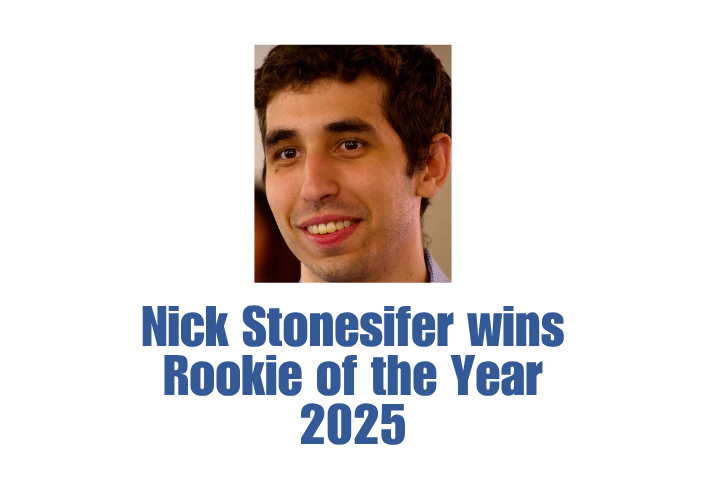
Reporters, editors and other media professionals gather for conference and awards program remotely and in person (5/8/26 - Annapolis, MD) – Members and supporters of the Maryland | Delaware | DC Press Association came together this week to highlight news with integrity and excellence in journalism by recognizing the winners of the Contest, which celebrates print and online work completed in 2025 . The contest, governed by the Association’s Editorial and Advertising Committees, admitted over 1,594 entries among 86 categories . There are six divisions in the contest, which group member publications into categories governed by total audience numbers, combining print and digital readership. One Best in Show award is given in each category across all divisions. These entries were judged by news media professionals at the Florida State Press Association. There are several top awards given across all divisions to the publication. These include the James S. Keat Freedom of Information Award for demonstrating use of public information act requests in its reporting, Courage in Journalism, honors acts of courage in journalism and strength in adversity while uncovering truth, and Best Moves, which highlights the most important thing MDDC member organizations did in 2025. The contest also honors top personnel in design and sales and honors new journalists. Members of the MDDC Press Foundation board of directors and journalism academics judged the top awards and the video audience voted on the Best Moves. New for 2025 was the A-Mark Prize for Investigative Journalism, which provides first, second and third place cash prizes for work in Maryland, Delaware and the District of Columbia. The capstone award, one per division, is News Organization of the Year. The Banner won the James S. Keat Freedom of Information Award for a wide-ranging portfolio of substantive projects that used public records in reporting. From investigations into child deaths from abuse and neglect to reporting on public officials’ use of Google Chat that auto deletes messages after 24 hours, Banner reporters were persistent in their pursuit of public records. Their groundbreaking investigation into the public transit times endured by Baltimore City’s schoolchildren was a finalist for the Pulitzer Prize. The award is named for Jim Keat, a retired editor and foreign correspondent for the Baltimore Sun, who was a long-time advocate for public information access. Keat is also a member of the MDDC Newspaper Hall of Fame. Read more . The Star Democrat was awarded the Best Move of 2025 for its new daily emailed newsletter which combined strong data analytics and local content to create a useful product with clear revenue gains. The winner was determined by audience vote. Read more . The Association recognized a new journalist with the Rookie of the Year award. This award honors a new journalist with less than 18 months' experience in the field. Six nominations were received from five member publications. Nick Stonesifer of Spotlight Delaware is the 2025 Rookie of the Year for his “well researched, well written and important work” teamed with a drive and determination to use public records in his reporting. Read more . Gabriella Ferraro O’Brien won Designer of the Year , which honors a body of work over the contest cycle. O’Brien’s portfolio of work was noteworthy for her “impressive submission of imaginative and creative design with sophisticated use of white space that allows for typographic hierarchy. The variety of typefaces, font sizes, typeface weights, and colors contribute to the hierarchy while the page designs feel unified.” Read more . The Baltimore Beat (baltimorebeat.com) and Baltimore Fishbowl (baltimorefishbowl.com) share Best of Show for MDDC’s Website of General Excellence category, which honors a news organization’s ability to connect with readers through social media and engagement, and local news coverage. The judges noted “Baltimore Beat stands out with bold, hyper-local links that are interesting and useful.” “Baltimore Fishbowl’s presentation offers a wonderful array of information with attractive, user-friendly design.” The award was judged by journalism instructors at Loyola University of Maryland. Read more. The News Organization of the Year awards represent the best publication in each division. These awards are chosen based on the points accumulated for first and second prizes in each category. The Baltimore Banner won the award in Division A; The Frederick News-Post was named News Organization of the Year for Division B; and Catholic Review won in Division C. Baltimore Beat and Spotlight Delaware shared the award in Division D; Coastal Point was named News Organization of the Year for Division E; and Morning Star Publications won in Division F. For a full listing of winners and their award-winning work, view our presentation episodes at https://youtube.com/playlist?list=PLRxzvJD4IXLBvNkmcUfFUogmBCw35XKUa&si=EAww-G0KFMx6V67w ### ------------------------------------------------------------------------------------------ The Maryland | Delaware | DC Press Association is a vibrant, influential association representing over 100 member news media organizations in our region. We believe a strong news media is central to a strong and open society. We help our members succeed through advocacy efforts, revenue generation, professional development and industry recognition. Learn more at www.mddcpress.com .
Show More