MDDC is excited to launch a new program, the Potter Digital Ambassador Program, which brings a paid Digital Ambassador into MDDC member host newsrooms to solve a technological or digital problem for one week, January 11 - 15. Participating newsrooms receive hands-on assistance with social media, digital content, email marketing, search engine optimization (SEO), audience engagement, and other digital initiatives while helping students gain valuable real-world experience. Students will be selected from local journalism programs. This program has run in several states for the past few years and we are excited to bring it to Maryland, Delaware and the District! To be considered for this program, please fill out the Interest Form - NO LATER THAN NOVEMBER 25th Learn more about the program through our podcast episode with Walt Potter. This program is intended to support small newsrooms with their digital presence. That could include ambassadors working to improve social media, website and email newsletters as well as training staff on best practices for search engine optimization, take photos and video, etc. The goal is to not only do the work but also to train the news outlet to carry it forward by holding training sessions with staff and leaving detailed training documents. Ambassadors working in these news outlets should not be doing standard reporting. This program is also not centered around revenue generation. The idea is that this work improves visibility for the news outlet and may even add a product (like an email newsletter), which could lead to revenue generation in the future; that is not the primary goal for the ambassadors. Please let me know if you have any questions! Rebecca
To: Standing Committee on Rules of Practice and Procedure Maryla rules@mdcourts.gov From: Rebecca Snyder, Executive Director, MDDC Press Association Date: November 17, 2026 Re: Comments regarding access to information in family law and guardianship case records The Maryland-Delaware-District of Columbia Press Association represents a diverse membership of news media organizations, from print to digital only to public media broadcast stations. We believe no changes need to be made to the current rules governing access to family law and guardianship case records. Currently, journalists and members of the public must go to a courthouse kiosk to view records in these cases; remote access is limited to attorneys and persons of interest. This itself is a substantial protector against widespread dissemination of sensitive information. Requiring an individual to make the effort to go to the courthouse to inspect case files places them on much the same footing as in the era before electronic case filing systems, when files had to be requested in person and physically inspected at the clerk’s office. If the Committee is inclined to expand remote access to these records, MDDC would welcome the opportunity to work with all stakeholders to determine a responsible way of doing so. But at a minimum, the current degree of access should not be rolled back. In addition to the “practical obscurity” afforded to family law and guardianship case files by the fact that they generally cannot be viewed remotely, Maryland law already provides the tools to address legitimate privacy and safety concerns. Courts can and do seal records in cases involving domestic violence, identities of minors, or credible threats of harm. When pleadings are not sealed entirely, redaction is also available to remove personal identifiers (names of children, social security numbers, DOBs, etc.), private financial information, or other legitimately sensitive details. MDDC’s members have collectively covered the Maryland courts for decades, and they can attest that litigants – and, of course, judges -- are well aware of the appropriate steps to take to prevent disclosure of such information. It should not be that this entire class of cases if off-limits simply because some of the information in a pleading might legitimately be sealed or redacted, when (1) tools already exist to do so, and (2) no documented problems have occurred. Moreover, there is a public benefit to ensuring that family law and guardianship records are not entirely unavailable. Reporters use family law and guardianship case information in a variety of ways. Our members use professional standards of journalism and take care to preserve the anonymity of children’s information. However, these cases are often critical to providing a fuller picture of a newsworthy individual, from finances to background information. For instance, there is a story developing now regarding a missing woman from the District of Columbia where the

Facing funding cuts and growing pressure on local journalism, Baltimore Public Media and Delmarva Public Media are building a partnership designed to expand reporting, share resources and preserve their distinct community identities. Collaboration is often presented as a solution to the financial challenges facing local news organizations. But successful partnerships require more than sharing stories or reducing expenses. They demand trust, compatible missions and a willingness to rethink how organizations operate without sacrificing what makes them valuable to their communities. This article draws on Episode 188 of Five Dubs, a podcast of MDDC Press Association exploring local news media and the people, businesses and communities connected to it. Host Rebecca Snyder speaks with Judy Diaz of Delmarva Public Media and Craig Swagler, president and CEO of Baltimore Public Media, which operates WYPR and WTMD. Diaz previously held leadership roles in audience strategy at PBS, helped launch PBS Kids and served as vice president of marketing at Politico. Swagler brings commercial radio experience and an entrepreneurial approach to public media leadership. Together, they discuss a developing partnership intended to strengthen local journalism across Maryland. Listen to Five Dubs on Spotify: https://open.spotify.com/show/0eqPC0EYwkiEm4uvZsxEAl?si=3c0a3df349f14a49 Financial Pressure Creates an Opening for Collaboration The loss of federal funding accelerated conversations that Diaz and Swagler had already begun. Delmarva Public Media lost approximately 25% of its budget across its three stations, while Baltimore Public Media experienced a roughly 6% reduction. Rather than approaching the cuts solely as a reason to reduce services, the two leaders saw an opportunity to combine complementary strengths. Their organizations serve different geographic audiences but share a commitment to independent, accessible journalism. Their first major initiative focuses on environmental and agricultural reporting, issues that connect communities throughout Maryland. Delmarva Public Media brings deep knowledge of Eastern Shore agriculture and coastal communities, while Baltimore Public Media contributes statewide political reporting and coverage from Annapolis. Diaz described how a shared reporter could transform Delmarva's coverage from primarily interviewing other journalists to producing original reporting. Potential stories include the impact of immigration enforcement on the poultry workforce and rising water levels threatening homes in Cambridge. For Swagler, the opportunity extends beyond individual stories. Environmental issues, agriculture, transportation and economic development connect communities that may otherwise see themselves as geographically and culturally separate. Collaboration Without Losing Local Identity One of the partnership's defining principles is that neither organization should lose its identity. Swagler emphasized that imposing Baltimore's programming or organizational approach on Delmarva would undermine the partnership's purpose. Instead, the organizations are identifying areas where their capabilities complement one another while preserving their distinctive local voices. That distinction separates collaboration from consolidation. The organizations are not announcing a merger, and both leaders recognize the structural differences between Baltimore Public Media and Delmarva's university-licensed stations. Diaz already has experience with this model. Delmarva Public Media's three stations operate through an agreement between Salisbury University and the University of Maryland Eastern Shore, sharing staff, editorial resources and sponsorship operations while maintaining separate audiences and programming identities. The partnership also aims to move beyond traditional content sharing. Potential opportunities include shared technology, administrative services, statewide sponsorships, grant applications and major donor relationships. The underlying business proposition is straightforward: money saved on duplicated operations can support more journalism. A Business Discipline That Supports the Mission Both leaders brought business experience to their relatively new public media leadership roles, and both emphasized the importance of financial discipline. Diaz described using analytics and financial modeling to reconsider Delmarva's sponsorship strategy. Rather than treating sponsorship as a charitable favor, she focused on the value of the organization's engaged audience and the importance of pricing that value appropriately. Swagler similarly introduced clearer performance measures, budget discipline and strategic priorities. He identified three organizational priorities: alignment, partnerships and revenue. Importantly, Swagler sees revenue as the result of executing the first two priorities effectively, rather than an isolated objective. Strong internal alignment and productive external partnerships should create greater audience value, which can support long-term financial sustainability. Their approach offers a practical lesson for nonprofit news leaders: a mission-driven organization still needs a disciplined business model. Financial stability makes it possible to invest in reporting, take calculated risks and withstand unexpected funding disruptions. Trust, Transparency and a Roadmap for Partnership Asked about the greatest risks in collaboration, Diaz identified a lack of transparency. Successful partnerships require honest conversations about finances, responsibilities and expectations, particularly when organizations begin sharing resources. She pointed to Delmarva's existing university partnership, which operates through a memorandum of understanding that can be revisited as circumstances change. Clear agreements about how money is allocated and how decisions are made help prevent misunderstandings. Swagler also acknowledged potential competitive tensions, including overlapping broadcast coverage. Rather than ignoring those challenges, he suggested using audience data to determine how each organization can best serve listeners without unnecessarily duplicating services. The leaders also see opportunities to develop the next generation of journalists. Delmarva's student newsroom provides hands-on reporting experience, and the partnership could give student-produced stories broader distribution across Maryland and new digital platforms. That workforce development component adds another dimension to the collaboration: strengthening the journalism pipeline while expanding the information available to communities. Measuring Success Through Community Impact For Diaz and Swagler, the ultimate test will not simply be whether the organizations reduce costs or produce more content. Success will mean that audiences understand the partnership's value and experience more relevant, comprehensive journalism. Potential measures include audience growth, stronger donor support, new grants, operational efficiencies and expanded reporting capacity. Just as important is whether the partnership connects Maryland communities through stories that reveal shared concerns and experiences. The Baltimore–Delmarva collaboration remains in its early stages, with many operational details still to be developed. But its guiding principles offer a useful framework for other local news organizations considering partnerships: begin with shared values, identify complementary strengths, establish transparent agreements and protect the local identities that audiences trust. As news organizations confront shrinking resources and growing information gaps, collaboration may become increasingly important. The challenge is not simply to do more with less, but to build partnerships that make journalism more valuable to the communities it serves. This blog post was written with the assistance of AI.
MDDC Press Association Applauds Governor Wes Moore’s Executive Order to Strengthen Local News in Maryland October 16, 2026 – Today, Governor Wes Moore took a strong step forward to strengthen and sustain local news in Maryland by issuing Executive Order 01.01.2026.20, Directing State Media and Advertising Procurement Spending to Maryland News Organizations. The executive order requires Maryland state agencies to prioritize local news organizations for at least 50 percent of their advertising spending, ensuring public dollars are reinvested in Maryland’s local information ecosystem. The policy applies broadly to print, digital, and broadcast outlets, recognizing the full range of platforms that serve Maryland communities. “This executive order reflects a practical shift in how we support local news,” said Rebecca Snyder, Executive Director of the MDDC Press Association. “It recognizes that local news is essential infrastructure for communities and treats it that way. By directing existing resources more intentionally, Maryland is strengthening the systems people rely on for timely, fact-based information. It also changes the conversation: sustainable support for local media can be built into everyday government operations.” Local journalism remains one of the few institutions dedicated to covering school boards, county governments, public safety, elections, housing, economic development, and the daily issues that shape residents’ lives. When local news organizations disappear, communities lose accountability, civic participation declines, and misinformation fills the vacuum. The executive order, based on Senate Bill 459 sponsored by Senator Jim Rosapepe and overwhelmingly passed by Maryland’s general assembly in the 2026 session, recognizes that state government advertising can serve two purposes at once: effectively communicate with Maryland residents and strengthen the trusted local institutions that help those residents stay informed. Local news organizations play a central role in connecting residents with reliable information, supporting civic participation, and helping communities stay informed about issues that affect daily life. This executive order reinforces that role by aligning public spending with the local media infrastructure that serves Marylanders. About MDDC Press Association The Maryland-Delaware-DC Press Association (MDDC) represents a diverse network of local news organizations across the region, including daily and weekly newspapers, digital-first outlets, and broadcast partners. MDDC members provide essential local information that supports communities, businesses, and public engagement. The association works to strengthen the sustainability of local news and ensure that residents across Maryland, Delaware, and Washington, D.C. have access to reliable, community-focused reporting.
Press Freedom Is Stronger When the News Industry Stands Together
MDDC Press Association Condemns Rep. Harris’ Treatment of Reporter Cat Murphy October 14, 2026 - The MDDC Press Association believes U.S. Rep. Andy Harris should apologize to Capital News Service reporter Cat Murphy for trying to shut down her reporting after misrepresenting Maryland’s law about recording. Murphy was part of a group of reporters who covered a debate Tuesday evening between Harris and his Democratic challenger, Dan Schwartz. While a media scrum asked Harris questions, as seen on a video clip, he singled out Murphy and told her she didn’t have permission to record his comments. He said that because Maryland is a two-party consent state — all people in a conversation must consent before they can be recorded — Murphy was violating the law. But Murphy knew the law and didn’t bend, trying to explain to Harris why he was wrong. Harris wouldn’t relent and called for a police officer. To be clear, Harris was wrong in claiming: “She needs my approval to record.” This situation was a clear, obvious example of when two-party consent does not apply — a public space, with no expectation of privacy. See the video at https://www.instagram.com/p/DeeZtuoRe7N/ Harris has been in that position many times before, with journalists recording him as they report his comments. He should know better, and if he doesn't, he should learn. The Maryland-Delaware-DC Press Association is happy to help work with him and his office to understand this law, which is critically important for the practice of journalism. Harris should have listened to Murphy when she tried to reason with him, pointing out that the group of journalists were all recording him in a public space and he was ordering one of them to turn off their recording device. We are disappointed in Harris and strongly support Murphy, who was better informed than the congressman she was covering. The MDDC Press Association calls on Harris and all elected officials and candidates for office to respect both the letter and the spirit of press freedom protections and to reaffirm their commitment to the First Amendment. A free press is not an obstacle to democracy—it is essential to its survival. MDDC champions local news media organizations and advocates for press freedom. We stand with journalists and advocate for freedom of the press, ethical standards, and the rights of media professionals to do their work without fear, harassment or violence. *** The transcript: CONGRESSMAN ANDY HARRIS: You do not have my permission to record. If you record, we will refer you to the prosecutor. REPORTER CAT MURPHY: Everyone in here is recording HARRIS: But you are not allowed to. We are in a two-party state. You are not allowed to record. MURPHY: Why am I not allowed to? HARRIS: What, excuse me? MURPHY: Why am I not allowed to? HARRIS: Because I refuse to give you permission to do recording. MURPHY: If everyone else in this room. HARRIS: It doesn't make it– MURPHY: Can you please hold my phone? HARRIS: Do you know the law? UNIDENTIFIED REPORTER: What’s your question? UNIDENTIFIED REPORTER: With due respect, this is a public forum UNIDENTIFIED REPORTER: Are you a lawyer? HARRIS: Are you? REPORTER: You're a doctor. HARRIS: Yeah actually I'm a legislator yeah I actually I actually know the law well because we have to prosecute — MURPHY: You said that you wanted the war in Iran, you said that it could have gone smoother and it could've gone better. What did you mean by that? HARRIS: Take her camera. You're gonna have to take her camera. She is violating the law. In fact, get an officer in here. She's violating the law on two-party, two-party recording. We need an officer. UNIDENTIFIED REPORTER: Excuse me, isn’t that just for telephone communication? I don’t know the law but that’s just a recording. HARRIS: Video and audio, and video have to have two-party approval in Maryland now they may not have to have it in Washington DC. They have to it in Maryland. She needs my approval to record. That's why when she did it, it makes no difference whatsoever. MURPHY: Sir, we are in public. We're in public. HARRIS: We are not in a public facility. MURPHY: Congressman, you said that you supported the First Amendment. What does this say about that? HARRIS: All right, guys. UNIDENTIFIED WOMAN: Congressman Harris. HARRIS: She's ruining all your chances to get an answer about anything. See y'all. See y'all. Good night. Thank her. Thank her profusely.

Investigative Journalism That Makes a Difference: Kate Cimini on Reporting With Purpose

FOR IMMEDIATE RELEASE: September 9, 2026 WYPR Announces The Engagement, a New Weekday Program Hosted by D. Watkins A new WYPR program will bring news, conversation and community together beginning this October BALTIMORE — Baltimore Public Media, home of WYPR and WTMD, today announced The Engagement, a new locally produced, news-driven public affairs program hosted by New York Times bestselling author and award-winning journalist D. Watkins. The program premieres Monday, October 19, and will air Monday through Thursday at 11 a.m. on WYPR 88.1 FM. From the news of the day to politics, community, arts and culture, The Engagement will explore the stories and conversations shaping Baltimore, Maryland and the broader region. Built around the idea that engagement means listening as much as talking, the program will bring different voices and perspectives into the conversation, ask tough questions and challenge assumptions, with an eye toward what comes next. Conversations will extend beyond the broadcast, creating opportunities for ongoing engagement with the people and communities WYPR serves.
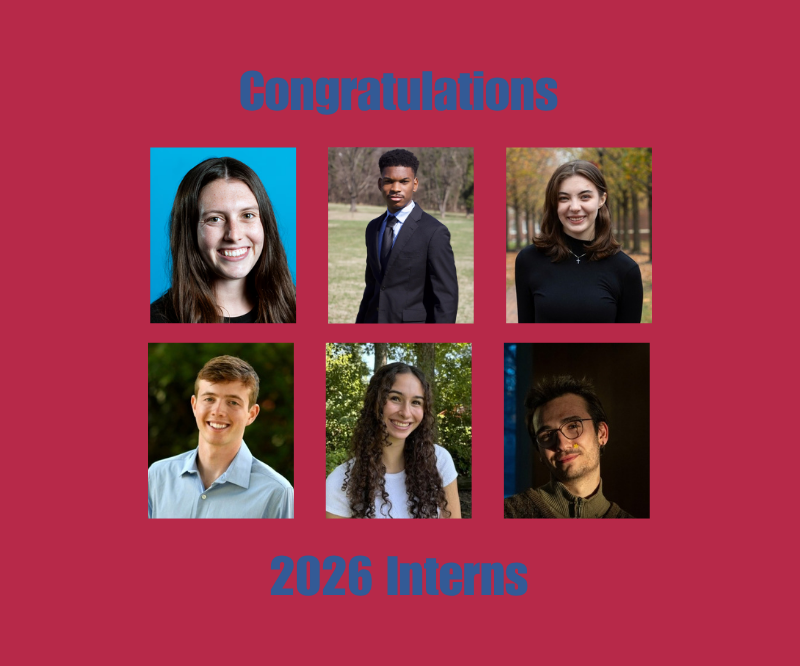
This summer, six journalism students have been working in newsrooms across Maryland and Delaware. The Reese Cleghorn Internship program hires outstanding student journalists to intern in MDDC member newsrooms each summer. Again this year, MDDC is administering Delaware Community Foundation’s Internship program. Summer internships were made possible through funding from the Delaplaine Foundation, the Goldseker Foundation and The Nutting Family Foundation, Baltimore Fishbowl, Baltimore Brew, and many individual donors to MDDC. These interns were selected from a pool of highly qualified applicants. The intern selection committee, comprised of Andrea McDaniels of The Baltimore Banner, Ann LoLordo, Diana Sugg freelance journalist, Molly Fellin Spence of The Baltimore Sun, Kamau High,, Sam Davis of the Baltimore Sun and Tom Ferraro reviewed more than thirty initial applications, which included a personal essay, published clips and educational and professional references. The committee narrowed the field and conducted a panel interview with each candidate. Each intern was immersed in their host newsroom and treated as a professional working journalist. Students in the program are expected to generate 35-40 published clips and real-world experience during their 8-week paid internship. As part of the program, interns participate in a one-day briefing on how to get the most out of the internship. The interns are (in alphabetical order): Marijke Friedman , University of Maryland (funded by Nutting Family Foundation); Andrew Hall , Morgan State University (funded by the Goldseker); Evelyn Lucado , Washington College (funded by Suzy Dunn); Oliver Mack , University of Maryland, College Park (funded by Delaplaine); Nicole Pilsbury , University of Pittsburgh (funded by MDDC Press Foundation); Theodore Rose , University of Maryland, College Park (funded by MDDC’s fiscal sponsorship of the Baltimore Brew).

7/3/26 Group Editor – Jewish Media Division Mid-Atlantic Media Mid-Atlantic Media (MAM), a growing publisher of community and niche media brands, is seeking an experienced Group Editor to lead its portfolio of award-winning Jewish publications. This leadership role is ideal for an accomplished editor who thrives in a fast-paced newsroom, can manage multiple projects simultaneously, and enjoys mentoring emerging journalists. The successful candidate will serve as both an editorial leader and a public ambassador for our publications, building relationships with Jewish communal leaders and readers throughout the region. This is a high-energy position where a digital-first daily content strategy is combined with the demands of producing high-quality weekly magazines. The candidate will be able to commute to a Columbia, Maryland office. Qualifications Minimum of five years of experience in Jewish community journalism Strong editing skills with the ability to work quickly and accurately in a deadline-driven environment Proven leadership experience managing and motivating editorial teams Familiarity with WordPress, social media platforms, digital photography, and video Ability to balance high-level editorial planning with hands-on reporting, editing, and community engagement Deep knowledge of and connections within the Jewish community required Responsibilities Editor Guide reporters in developing enterprise stories, breaking news coverage, and local exclusives Plan editorial coverage and manage story assignments Monitor community developments, social media, email, and other sources for story ideas and emerging trends Communicate regularly with sources, community leaders, readers, and public officials Oversight of editing and factchecking to ensure adherence to AP Style and company editorial standards Maintain the highest standards of journalistic integrity and quality Team Leader Lead, mentor, and develop a team of reporters and editors Set clear editorial expectations and foster a culture of accountability and excellence Assist with reporting and breaking news coverage when needed Drive strong digital engagement and audience growth across websites, newsletters, and social media platforms Editorial Strategist Represent the publications throughout the communities Help expand audience reach and strengthen brand visibility Collaborate with company leadership on long-term editorial initiatives and growth strategies Work closely with the publisher to identify opportunities for innovation and expansion Compensation Competitive salary and benefits package. To Apply Please submit a cover letter, resume, and relevant work samples to cburke@midatlanticmedia.com . No phone calls, please.
